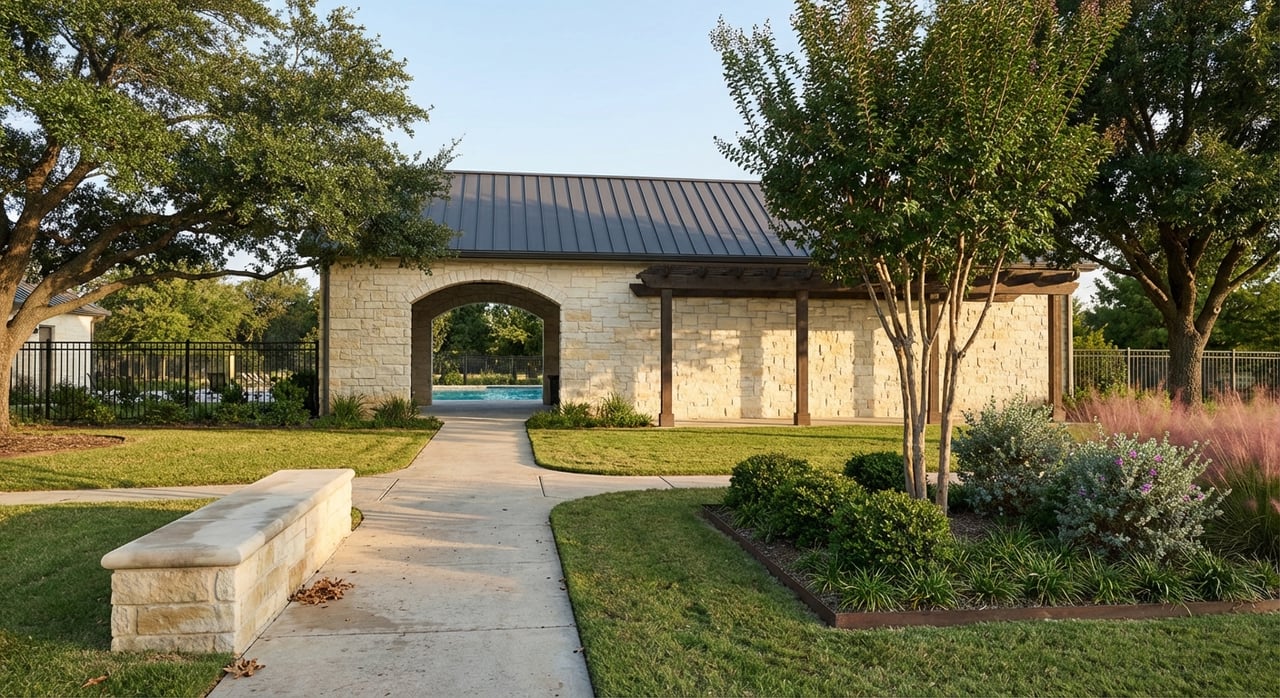
What if your pool, gym, trails, and weekend events were steps from your front door? If you are exploring a move to Frisco or North Collin County, you have likely noticed how many neighborhoods are master planned. It can be exciting and a little confusing. In this guide, you will see how these communities shape everyday life, what fees and rules to expect, and how to compare options before you buy. Let’s dive in.
What “master planned” means in Frisco
In North Dallas and Collin County, a master‑planned community is a developer‑designed neighborhood delivered in phases with coordinated open space, trails, and a central amenity hub. These communities use recorded covenants and an association to operate shared facilities. In Frisco, sizes range from a few hundred homes to multi‑thousand‑acre projects that add retail and office nodes to support daily needs. You will see both mature neighborhoods and active buildouts across the city. That mix is typical of the local model described in this overview of Frisco’s master‑planned features and fees.
Frisco’s growth story helps explain why large plans are common. The city has been one of the fastest growing in the country, and local economic data supports ongoing buildout of large residential and mixed‑use projects. You can see current population and development context in the Frisco Economic Development Corporation’s demographic pages.
For examples, look at Fields Frisco, a 2,500 plus acre mixed‑use plan anchored by the PGA of America with planned residential, retail, and office neighborhoods. On the residential side, Phillips Creek Ranch shows how extensive green space, pools, and trails come together in a more finished community. The Grove illustrates the multi‑phase, amenity‑hub approach you will find throughout Frisco.
Amenities that reshape your routine
Core amenities you can walk to
Most master‑planned communities organize lifestyle around a central amenity set. You will commonly find a clubhouse with event space, multiple pools, splash pads, a fitness center, miles of hike and bike trails, pocket parks, dog parks, playgrounds, and sport courts. Some plans add community gardens or specialty features. Phillips Creek Ranch’s amenity map is a good snapshot of the everyday features you will often see in Frisco.
These amenities concentrate daily recreation close to home. Instead of driving across town for a workout or swim practice, you can often get there in a few minutes on local streets or trails.
Programming turns neighbors into community
Amenities are only half the story. Many larger communities hire a lifestyle director or events team to run a year‑round calendar. Expect swim teams, fitness classes, food‑truck nights, seasonal festivals, kids’ camps, and movie nights. This programming is a clear trend across Texas master‑planned communities and has even earned national recognition for active calendars. The result is a built‑in rhythm of weekday and weekend gatherings that helps new residents plug in quickly.
How a typical week can change
- Weekday mornings: On‑site trails or playgrounds make before‑school activity convenient. Some residents fit in a quick pool lap or a short gym session without a long drive.
- Afternoons and evenings: Swim practice, tutoring in a clubhouse room, or a community yoga class happen nearby. That reduces time in the car.
- Weekends: Concerts, markets, and family events often come to you. Many residents plan their social life around the community calendar.
One important detail: amenities are often built in phases. Early‑phase buyers should confirm which features are complete now, which are planned, and whether any special memberships or fees apply.
Fees, associations, and what you pay for
Master and sub associations
Large plans often use layered governance. A master association maintains community‑wide infrastructure and major amenities. Sub associations handle village‑level features like small parks, streetscapes, and architectural control. That can mean multiple assessments and separate rules. Before you write an offer, confirm which associations apply to your lot and how often each one bills.
Typical HOA ranges and what is covered
Frisco HOA dues vary. Industry guides and local listings show a range from the low 30s per month for minimal associations to 100 to 400 plus per month for amenity‑rich plans. Condo and townhome dues are often higher since exterior maintenance is included. Example listings show monthly condo or townhome dues around 390 dollars and single‑family examples ranging from the low 200s per year to about 2,700 dollars per year. Always read the resale certificate for exact figures and billing schedules.
What do dues usually cover? Common area landscaping and maintenance, pool and clubhouse operations, trail upkeep, and entry upkeep are typical. Some neighborhoods also include front‑yard care in the dues, but that varies by product type, so confirm in writing. Certain services such as private swim lessons or special classes may cost extra.
MUDs, PIDs, and your property tax bill
In Texas, developers often use Municipal Utility Districts or Public Improvement Districts to finance water, sewer, drainage, roads, or major infrastructure. These district assessments appear on your property tax bill or as separate charges. Whether a Frisco address sits inside a MUD or PID depends on the specific tract. Districts and bond obligations can materially change your annual carrying cost, so verify the parcel’s district status and assessment schedule using state resources and your title and lender teams.
Texas owner protections and HOA process
Texas Property Code Chapter 209 sets notice, meeting, and enforcement procedures for many HOAs and provides due process before fines or liens escalate. Recent legislative changes for the 2025 session also updated some disclosure and management‑certificate rules and capped certain condo resale certificate fees. Use the management certificate and resale certificate during option period to verify fee schedules, special assessments, pending litigation, and the association’s financial position. If you receive a notice of violation as an owner, the statute outlines your right to notice and an opportunity to cure.
Home types and where you might fit
Product mix inside Frisco master plans
You will find a wide range of homes in Frisco’s master‑planned neighborhoods. Expect single‑family homes on 50 to 70 foot lots, townhomes and condos near mixed‑use nodes, low‑maintenance patio homes, and gated or custom estates in higher‑end pods. Larger plans often include a variety of housing types to support nearby retail and office uses, so you can often move within the same community as your needs change.
Price context and how to benchmark value
City‑level home values shift with the market, but recent public metrics place the typical Frisco home value in the mid 600k range. Individual neighborhoods sit above or below that number depending on location and product type. Luxury pods and custom enclaves command premiums, while townhome product near mixed‑use areas can offer a lower entry price per unit. Use an apples‑to‑apples approach when you compare: lot width, builder tier, finish level, and amenity access can change price bands inside the same master plan.
Example communities to explore
- Fields Frisco: A regional mixed‑use plan anchored by the PGA of America with multiple residential neighborhoods planned alongside retail and office. Check the plan’s residential overview for current info.
- Phillips Creek Ranch: A mature plan known for connected trails, green space, and multiple pool facilities. The amenities page provides a helpful snapshot of everyday features.
- The Grove: A multi‑phase neighborhood with an amenity hub called Orchard House and a range of single‑family options. Expect an active programming calendar typical of larger Frisco MPCs.
Practical checklist before you write an offer
Here is a focused due‑diligence list you can use with your agent during the option period:
- Resale certificate, current budget, and any reserve study. Confirm fee schedules and whether any special assessments are pending.
- Management certificate filed with the county or state. Verify the association’s legal name, contact, and current documents.
- CC&Rs, bylaws, rules, and recent board minutes. Look for ARC processes and common exterior rules such as solar, fencing, paint, and satellite dishes.
- Amenity buildout and phase schedule. Confirm what is open now, what is planned, and the funding source for future amenities.
- MUD or PID status for the specific parcel. Request the latest assessment and bond schedules.
- Any mandatory club or reciprocal memberships tied to the lot, including initiation fees.
Everyday tradeoffs to weigh
- Time and convenience: Many buyers trade some private yard chores for HOA‑managed landscaping and on‑site amenities. That can free up weekends and add more planned social time.
- Cost predictability vs special assessments: Regular dues make maintenance more predictable, but MUD or PID taxes and special assessments can add to carrying costs. Review budgets and recent minutes to spot trends.
- Social life and rules: The calendar helps you meet people fast, which is a plus for relocators. You also agree to follow community standards for exterior appearance and shared facilities.
How to compare two master‑planned options
Use a simple monthly carrying‑cost model to compare apples to apples. For each home, total the projected mortgage payment, property taxes, HOA dues, and any MUD or PID assessment. This approach brings hidden costs into the open and helps you weigh a lower price against higher ongoing fees. Industry guides and local listings show how dues can vary by product type and billing style, so build your sheet from the resale certificate rather than estimates.
The bottom line for everyday living
Master‑planned communities in Frisco are designed to place recreation, connection, and daily convenience close to home. The tradeoff is a set of dues, rules, and possible district assessments that you need to understand up front. If you confirm the amenity timeline, know your associations and taxes, and match the product type to your lifestyle, you can enjoy the best parts of the model with fewer surprises.
If you want help comparing neighborhoods across Frisco, Prosper, McKinney, and the northern Dallas suburbs, reach out. As your local guide, Jeremy Jordan will walk you through fees, documents, and day‑to‑day fit so you can move forward with confidence.
FAQs
Are Frisco master‑planned communities more expensive overall?
- It depends on the mix of HOA dues, property taxes, and any MUD or PID assessments, so calculate the full monthly carrying cost before you decide.
What HOA rules should I expect in a Frisco master‑planned neighborhood?
- Most communities use CC&Rs and an ARC process to review exterior changes such as solar, fencing, or paint, with Texas law setting notice and enforcement procedures.
How do MUDs and PIDs affect my payment in Frisco?
- District assessments are added to your property tax bill or charged separately, which can raise your monthly cost compared with a similar home outside a district.
What happens if I fall behind on HOA dues in Texas?
- Associations can assess late fees and place liens, and after required notices may pursue stronger remedies, so contact the association early to discuss cure and payment options.
How can I confirm which amenities are open now in a new Frisco plan?
- Ask for the current phase map and buildout schedule, and verify in writing what is complete, what is planned, and whether any features require separate membership or fees.